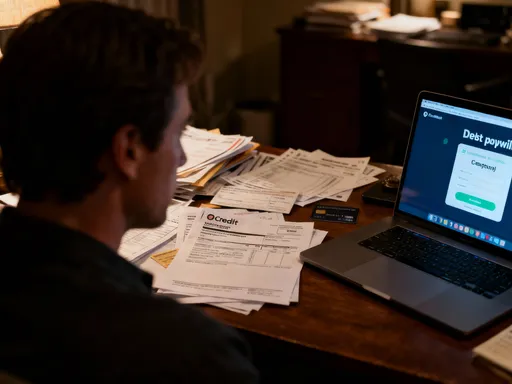
Debt-Free Dreams: How I Rebuilt My Portfolio Without Losing Sleep
You’ve felt it—that heavy knot in your stomach when bills pile up and your investments go nowhere. I’ve been there, stuck in the cycle of owing while trying to grow wealth. It seemed impossible to pay off debt and build a portfolio. But what if you could do both, without risking everything? This is how I balanced debt repayment with smart, low-pressure investing—using real strategies that actually work. It wasn’t about sudden windfalls or risky bets. It was about consistency, clarity, and making small choices that added up to lasting financial peace.
The Breaking Point: When Debt and Dreams Collide
There was a time when I checked my bank account with dread. Each month, the same story unfolded: minimum payments on credit cards with interest rates over 20 percent, a car loan that felt heavier than the vehicle itself, and a savings account that barely budged. I wanted to invest—really wanted to—but every time I considered putting money into a retirement fund or a brokerage account, guilt set in. Wasn’t it irresponsible to grow wealth while carrying high-interest debt? I told myself I’d start investing after the debt was gone. But “after” kept moving. Years passed. The debt didn’t shrink much, and my portfolio remained empty. I wasn’t just losing money to interest—I was losing time, the most valuable asset in personal finance.
That moment of clarity came on a quiet Sunday morning. I sat at my kitchen table with a spreadsheet open, the numbers staring back at me like a verdict. I realized I had been treating debt and investing as enemies when they could be allies. Avoiding the market entirely meant missing out on compound growth—something that rewards early and consistent participation. At the same time, ignoring my debt meant throwing good money after bad in the form of interest. The truth was, I couldn’t afford to do only one. I needed a way to address both without burning out. The emotional toll of financial stress was affecting my sleep, my relationships, and my sense of control. I knew something had to change—not just my habits, but my entire approach.
What I didn’t realize then was that I wasn’t alone. Many people face this same crossroads, especially women in their 30s and 40s managing household budgets, caring for children or aging parents, and trying to secure their own futures. The pressure to get it all right can feel overwhelming. But the solution wasn’t perfection. It was progress. And progress began with admitting that the “all debt, no investing” mindset wasn’t sustainable for me. I needed a strategy that honored both my present obligations and my future dreams.
The Myth of “All or Nothing” in Debt and Investing
One of the most persistent myths in personal finance is that you must choose between paying off debt and investing. Financial gurus often present it as a binary: throw every spare dollar at your loans, or jump into the stock market with both feet. But real life isn’t that simple. For many, especially those with moderate incomes and multiple financial goals, an extreme approach leads to burnout, resentment, or both. I learned this the hard way. When I tried to focus only on debt, I felt deprived. When I skipped payments to invest, I felt anxious. Neither extreme worked. The real breakthrough came when I stopped seeing these goals as opposites and started viewing them as parts of a single financial ecosystem.
Consider the opportunity cost of delaying investments. Let’s say you’re 35 and decide to wait until your $20,000 in credit card and personal loan debt is paid off before investing. If that takes five years, and you finally start contributing $500 a month to a retirement account at age 40, your money has less time to grow. Assuming a 7 percent average annual return, by age 65, you’d have about $500,000. But if you’d started at 35 with the same monthly contribution, you’d end up with over $1 million. That’s not magic—it’s math. Delaying investment means sacrificing decades of compounding. On the other hand, investing while carrying high-interest debt can feel like pouring water into a bucket with holes. A balanced approach recognizes that both concerns are valid and must be managed together.
Behavioral finance also supports this middle path. Studies show that people who feel completely restricted in their financial lives are more likely to abandon their plans altogether. When you never allow yourself to build wealth, even in small ways, motivation fades. But when you make progress on multiple fronts—paying down debt and watching your portfolio grow—you reinforce positive habits. Each small win builds confidence. That psychological boost is just as important as the numbers. The goal isn’t to maximize speed at the cost of sustainability. It’s to create a plan you can stick with for years, not weeks.
Mapping Your Financial Landscape: Know Your Debt and Goals
Before making any moves, I had to understand my full financial picture. This wasn’t just about listing debts and interest rates—it was about seeing how each obligation fit into my life. I started by categorizing my debt into three types: high-cost, moderate-cost, and low-cost. High-cost debt included credit cards with interest rates above 18 percent. These were my priority. Moderate-cost debt included my car loan at 6 percent and a personal loan at 9 percent. Low-cost debt was my federal student loans at 4 percent, which also offered flexible repayment options. Not all debt is created equal, and treating them the same would have been a mistake.
But numbers alone didn’t tell the whole story. I also considered the emotional weight of each debt. My credit card balance made me anxious every time I saw it. It felt like a personal failure. The car loan, while a burden, didn’t carry the same shame. And my student loans, though large, felt like an investment in my education. Recognizing these feelings helped me design a plan that addressed both logic and emotion. I decided to attack the high-cost, high-stress debt first while making minimum payments on the rest. At the same time, I had to align my financial plan with my life goals. I wanted to buy a home in five years. I also hoped to start a small business one day. These milestones shaped how much I could afford to invest now without jeopardizing future plans.
I set clear, time-bound targets. For example, I gave myself three years to eliminate credit card debt. That meant calculating how much extra I needed to pay each month and adjusting my budget accordingly. I also defined what “financial stability” meant for me: no high-interest debt, three to six months of expenses saved, and a growing retirement account. With these goals in place, I could make informed decisions about where each dollar should go. This clarity prevented me from making impulsive choices, like overpaying a low-interest loan while ignoring investment opportunities. Mapping my financial landscape wasn’t a one-time task. I reviewed it every six months, adjusting as my income, expenses, and goals evolved.
The Hybrid Strategy: Allocating Cash Between Debt and Investments
With my goals defined, I created a hybrid strategy that allowed me to make progress on both debt and investing. The core principle was balance: I would allocate a portion of my extra income to debt repayment and another portion to building my portfolio. I didn’t go 50/50—that wouldn’t have made sense given my high-interest debt. Instead, I used a tiered system based on urgency and opportunity. For every dollar of extra income, 70 cents went to paying down high-interest debt, 20 cents went to a low-cost index fund, and 10 cents went into a high-yield savings account as a mini emergency fund.
This system worked because it was realistic. I wasn’t asking myself to live on rice and beans or to time the stock market. I focused on consistency, not heroics. The investment portion, though small at first, was automatic. I set up a direct deposit from my paycheck into a brokerage account, just like a retirement plan. That way, I wasn’t tempted to skip it when money was tight. I chose a broad-market index fund that tracked the S&P 500 because it offered diversification, low fees, and long-term growth potential. I didn’t try to pick stocks or chase trends. My goal wasn’t to get rich quickly—it was to participate in the market’s growth over time.
The key was discipline and flexibility. If I got a bonus or tax refund, I’d use 80 percent to accelerate debt repayment and 20 percent to boost my investments. If my car needed repairs and I had to tap my emergency savings, I paused the investment contribution for that month but kept making minimum debt payments. This wasn’t about perfection. It was about keeping the system intact. Over time, as my high-interest debt shrank, I shifted the allocation. Once the credit cards were paid off, I moved to a 50/50 split between debt and investing. Later, when all debt was gone, I increased my investment rate to 80 percent, with 20 percent going into savings and other goals. The hybrid strategy wasn’t static—it evolved with my progress.
Risk Control: Why Safety Nets Prevent Costly Mistakes
One of the biggest mistakes people make when paying off debt is ignoring emergencies. I used to think that the fastest path to freedom was to throw every spare dollar at my loans. But then I had a medical bill I didn’t expect. With no savings, I had to put it on a credit card. All my progress unraveled in a matter of weeks. That’s when I realized: no debt repayment plan is safe without a buffer. A financial safety net isn’t a luxury—it’s a form of risk control. It protects your progress and prevents setbacks from turning into full-blown crises.
So I changed my approach. Before I started aggressively paying down debt, I built a small emergency fund of $1,000. It wasn’t much, but it was enough to cover minor repairs, unexpected bills, or a few days of missed work. Once my high-interest debt was under control, I expanded that fund to three to six months of living expenses. I kept this money in a high-yield savings account—separate from my checking account, so I wouldn’t be tempted to spend it, but accessible when needed. This account earned interest, so my money wasn’t just sitting idle. It was working for me, quietly and safely.
This buffer gave me peace of mind. I could stick to my debt repayment plan because I knew I wouldn’t have to rely on credit if something went wrong. It also protected my investments. Without savings, any emergency would force me to sell stocks at a loss or stop contributing, breaking the compounding cycle. With a safety net, I could keep my long-term goals on track even when life threw curveballs. Risk control isn’t about avoiding all danger—it’s about preparing for the inevitable bumps in the road. A well-structured financial plan includes room for the unexpected, because in real life, the unexpected always shows up.
Rebalancing Over Time: Adapting as Debt Shrinks and Confidence Grows
As my debt decreased, my financial focus naturally shifted. The first major milestone was paying off my last credit card. That moment felt like a weight lifting. I celebrated—not with a shopping spree, but with a quiet sense of pride. From there, I didn’t stop. I took the money I had been putting toward the credit card and redirected it. Half went to accelerating my car loan payoff, and half went into increasing my monthly investment contribution. This process, called “debt snowball reinvestment,” allowed me to maintain momentum without adding strain to my budget.
Over the next year, I paid off the car loan. With that gone, I had even more flexibility. I reviewed my asset allocation and adjusted it to reflect my growing comfort with investing. At first, I had kept 80 percent of my portfolio in index funds and 20 percent in bonds for stability. Now, with more confidence and a longer time horizon, I shifted to a 70/30 split, gradually introducing slightly higher-growth options like a small-cap fund. I didn’t jump into speculative assets or individual stocks. I stayed within my risk tolerance, making incremental changes based on my progress and peace of mind.
Rebalancing wasn’t just about money—it was about mindset. Each time I paid off a debt, I gained confidence. I started seeing myself as someone who could manage money well, not just survive from paycheck to paycheck. That shift allowed me to think more strategically. I began exploring other goals, like saving for a down payment on a home and setting up a Roth IRA for tax-free growth in retirement. I also started reading more about personal finance, not out of anxiety, but out of curiosity. The journey wasn’t linear, but it was forward. And each step built on the last, creating a foundation of stability and growth.
The Mindset Shift: From Survival to Strategy
Looking back, the biggest change wasn’t in my bank account—it was in my mind. I used to feel trapped, like money was something that happened to me. Now, I feel in control. I make decisions based on goals, not fear. That shift didn’t happen overnight. It came from small, consistent actions that added up over time. Paying off debt while building a portfolio wasn’t just a financial strategy—it was a psychological transformation. It taught me that I could handle complexity, that I didn’t have to choose between today and tomorrow.
For many women, especially those managing households and planning for multiple generations, financial peace isn’t about getting rich. It’s about reducing stress, gaining options, and creating a life that feels secure. The hybrid approach gave me that. It allowed me to honor my responsibilities without sacrificing my future. I didn’t need a six-figure salary or a financial miracle. I needed a plan that was realistic, flexible, and kind to my emotional well-being. That’s what made it work.
Today, I still review my finances regularly. I adjust my contributions, rebalance my portfolio, and celebrate milestones. But the urgency is gone. In its place is a quiet confidence—a sense that I’m building something lasting. The dreams that once felt out of reach are now within sight. And the best part? I got there without losing sleep. That’s the real measure of financial success: not just the numbers, but the peace that comes with knowing you’re on solid ground.