Beyond the Guidebooks: Where Nagoya’s Hidden Heights Whisper Beauty
You know that rush when you find a spot so quiet, so stunning, it feels like your own secret? That’s Nagoya’s hidden observation magic. Forget crowded decks—this city hides jaw-dropping views in plain sight. I stumbled on rooftops, quiet temples, and skyline secrets most tourists miss. Trust me, the real skyline story isn’t in the brochures. Want to see Nagoya like a local insider? Let’s go.
The Overlooked Allure of Nagoya’s Skyline
Nagoya often stands in the shadow of Japan’s more celebrated cities—Tokyo’s glittering intensity, Kyoto’s timeless elegance—but to overlook Nagoya is to miss a quietly compelling urban tapestry woven from resilience, innovation, and tradition. As the heart of the Chūbu region and the industrial powerhouse behind Japan’s automotive and aerospace achievements, Nagoya has grown not with fanfare, but with purpose. Its skyline reflects this grounded ambition: a balanced blend of soaring glass towers and enduring historical landmarks, where the past is not erased but integrated into the modern cityscape.
The city’s architectural journey began centuries ago with the construction of Nagoya Castle in 1612, a symbol of feudal strength and craftsmanship. Though the original was destroyed during World War II, the reconstructed main keep stands today as both a memorial and a reminder of cultural continuity. Nearby, the sleek curves of the Nagoya TV Tower rise into the sky, built in 1954 as a beacon of postwar renewal. Together, they form a visual dialogue between eras—one of stone and timber, the other of steel and light.
Yet the true character of Nagoya’s skyline reveals itself beyond these well-documented icons. While most guidebooks focus on the panoramic deck of the Midland Square skyscraper or the observatory at Oasis 21, the city’s deeper beauty lies in places less traveled. It’s in the quiet alleyways that open unexpectedly onto framed cityscapes, in the unmarked stairwells leading to rooftop terraces, and in the temple gardens where cherry blossoms drift above distant rooftops. These are not tourist traps, but living viewpoints where the rhythm of daily life plays out beneath a changing sky.
What makes these overlooked vantage points so powerful is their authenticity. They offer unfiltered perspectives—no glass barriers, no timed entry, no souvenir shops. Here, the city breathes naturally. Trains glide along elevated tracks, office workers pause on lunch breaks with bento boxes in hand, and laundry flutters from apartment balconies like quiet flags of domestic life. To witness Nagoya from these angles is to see not just its structures, but its soul.
Why Hidden Viewpoints Matter for Authentic Travel
In an age where travel is often measured by checklists and Instagram likes, the pursuit of hidden viewpoints represents a quiet rebellion—a return to presence, discovery, and emotional connection. Mass tourism tends to funnel visitors toward a handful of photogenic spots, resulting in overcrowded decks, long lines, and experiences that feel more like performances than personal moments. The value of seeking out lesser-known observation points lies not only in avoiding crowds, but in cultivating a deeper relationship with a place.
When you find a secluded bench overlooking the city from a tucked-away park, or climb a quiet stairwell to a rooftop with no signage and no admission fee, something shifts. The noise fades. Your breathing slows. You begin to notice details: the way the morning sun gilds the edges of distant buildings, the faint hum of traffic rising like a lullaby, the silhouette of a cyclist crossing a bridge against a twilight sky. These are not just views—they are experiences rooted in mindfulness, where seeing becomes a form of listening.
Urban exploration, when done respectfully, aligns with the principles of mindful tourism—a growing movement that emphasizes awareness, sustainability, and emotional resonance. Studies in environmental psychology suggest that access to quiet, elevated spaces in cities can reduce stress, enhance cognitive clarity, and foster a sense of belonging. For travelers, this means that a solitary moment on a hidden overlook can be as restorative as a day at a hot spring.
Moreover, these quiet vantage points often reflect the city as locals know it—not as a curated postcard, but as a lived-in landscape. You see the ordinary alongside the extraordinary: a schoolyard nestled between office towers, a community garden thriving on a rooftop, a festival lantern still hanging days after the celebration ended. These glimpses into daily life create empathy and understanding, transforming a visit from sightseeing into storytelling. The hidden viewpoint, then, is not just a place to look out from, but a lens through which to see more deeply.
Rooftop Retreats: Finding Solitude Above the City
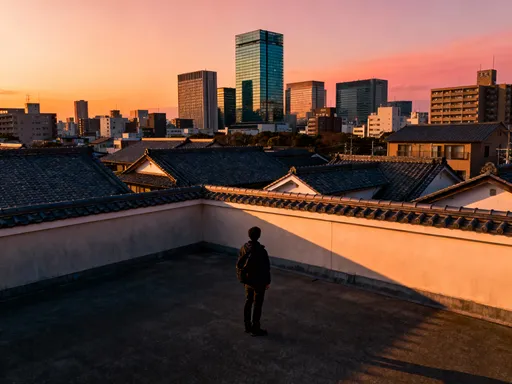
One of Nagoya’s best-kept secrets is its collection of accessible rooftops—quiet, often unadvertised spaces perched above the urban hum, offering panoramic views without the price tag or the crowds. Unlike major observation decks that require tickets and queues, these rooftops are embedded in everyday city life, found atop department stores, public buildings, and business complexes. They are not designed for tourism, but for breathing room—and that’s precisely what makes them special.
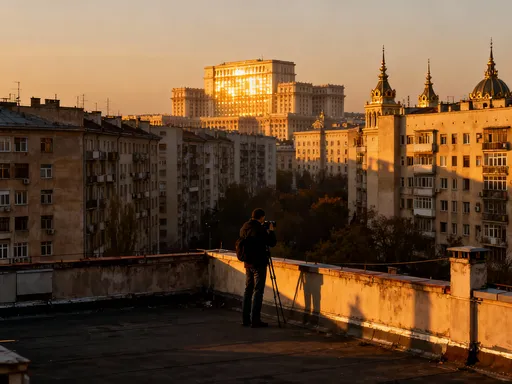
Take, for example, the rooftop garden of the Aichi Prefectural Government Building in Sakae. Located on the 24th floor, this open-air space is free to access and offers a 360-degree view of the city. On clear days, you can see Mount Komaki to the north and the faint outline of the Atsuta Shrine forest to the south. The space is simple—benches, potted plants, and a low railing—but the atmosphere is serene. Visit at sunset, and watch as the city transitions from daylight to a constellation of office windows and streetlights. It’s a moment of quiet grandeur, shared only with a few office workers on break and the occasional local photographer.
Another gem is the rooftop terrace of the Maruei Department Store in Matsuzakaya, a lesser-known counterpart to the more famous Mitsukoshi or Takashimaya. While most shoppers head straight for the luxury boutiques, few make their way to the top floor, where a modest outdoor space overlooks Nagoya Station’s bustling plaza. The view includes the angular silhouette of JR Central Towers and the graceful curve of the JR Gate Tower, framed by the movement of trains and pedestrians below. It’s a dynamic scene, yet the rooftop itself remains calm—a peaceful contrast to the energy beneath.
For the best experience, timing is essential. Late afternoon, about an hour before sunset, is ideal. The light is soft, the temperatures are mild, and the transition into evening reveals the city’s illumination in stages. Photographers should use a tripod or rest their camera on a railing to capture long exposures of moving trains or light trails. But even without a camera, the experience is worthwhile. Simply standing above the city, feeling the breeze and watching the world turn, offers a rare sense of perspective. Just remember to be respectful—these are shared spaces, not private viewing lounges. Keep noise to a minimum, avoid blocking pathways, and leave no trace of your visit.
Temple Grounds and Elevated Gardens with a View
While Nagoya is known for its modernity, it is also home to numerous temples and green spaces that offer elevated vantage points where nature, spirituality, and city life converge. These sites are often situated on gentle slopes or within park-like settings, providing framed views of the skyline that feel both intentional and serendipitous. Unlike the stark geometry of skyscrapers, these perspectives are softened by trees, garden pathways, and traditional architecture, creating a harmony between the urban and the natural.
One such location is Hōshō-ji Temple in the Shōwa Ward, a quiet Buddhist temple nestled on a slight rise overlooking the Hori River. Though not widely known to tourists, it is a favorite among locals seeking tranquility. The temple’s main hall faces west, offering an unobstructed view of the city skyline at sunset. In autumn, the surrounding maple trees ignite in red and gold, their colors reflecting in the still waters of the temple pond. In spring, cherry blossoms form a delicate arch above the stone path, framing distant towers in soft pink. It’s a place where time seems to slow, and the city, usually so loud, appears almost reverent.
Another peaceful retreat is the garden at Kōfuku-ji in Mizuho Ward. This smaller temple complex is part of a larger neighborhood park, making it easily accessible yet surprisingly secluded. The garden is designed in the kaiyū-shiki (strolling garden) style, with winding paths, small bridges, and carefully placed rocks. At its highest point, a wooden pavilion offers a view through a natural arch of pine trees, perfectly framing the Nagoya Dome and the distant silhouette of the Sky Promenade. It’s a masterclass in intentional framing—proof that even in a modern city, traditional Japanese aesthetics can guide the eye toward beauty.
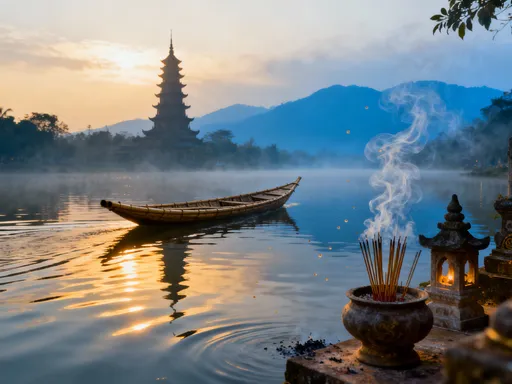
These temple grounds are not just scenic; they are spaces for reflection. The act of visiting them—removing your shoes, bowing slightly before entering a hall, listening to the chime of a wind bell—invites mindfulness. From these elevated gardens, the city does not feel imposing, but integrated. Smoke from incense rises alongside morning mist, and the call to prayer blends with the distant whistle of a train. To stand here is to understand that Nagoya’s identity is not divided between old and new, but enriched by both.
Urban Parks and Hillside Perspectives Worth the Walk
Sometimes, the best views come not from great heights, but from thoughtful positioning—places where a simple rise in the land or a clever alignment of trees and pathways opens a window onto the skyline. Nagoya is dotted with such urban parks and gentle hills, often overlooked by visitors in favor of more famous attractions. Yet for those willing to wander a little farther, these spaces offer some of the most authentic and rewarding perspectives in the city.
One standout is Yagoto Park, located in the eastern part of Nagoya. While not dramatically elevated, its location along the banks of the Shōnai River provides a long, uninterrupted view of the city center to the west. A paved walking trail runs along the riverbank, with several benches positioned to catch the evening light. During cherry blossom season, the path becomes a tunnel of pale pink, with the skyline glowing softly behind the blossoms. In winter, the bare branches create a latticework against the dusk, offering a more minimalist, contemplative view.
Another hidden gem is Tsurumai Park, particularly the northern slope near the rose garden. While most visitors focus on the playgrounds and the small zoo, few climb the grassy hill behind the botanical garden. From the top, there’s a quiet overlook where the Nagoya Castle tower appears in the distance, framed by evergreen trees. It’s a peaceful spot, often occupied only by a reading student or a couple enjoying a quiet moment. The walk up is gentle, making it accessible for families and older visitors alike.
For those near the Hori River, the stretch between Fushimi and Sakae offers a series of small, underappreciated parks with elevated walkways. These were designed as part of the city’s flood control system, but they double as scenic overlooks. At dusk, the river reflects the city lights like a mirror, and the elevated paths provide a sense of floating above the urban flow. These spaces are not grand, but they are real—places where locals jog, walk their dogs, or simply sit and watch the world go by. To join them, even briefly, is to experience Nagoya not as a destination, but as a home.
Insider Tips: How to Discover Your Own Hidden Lookout
The joy of discovering a hidden viewpoint is not just in the view itself, but in the act of finding it. While this guide highlights specific locations, the real adventure lies in developing the mindset of a quiet explorer—one who notices, observes, and wanders with intention. The ability to spot a potential lookout is a skill that grows with practice, and it begins with paying attention to the subtle cues of the urban landscape.
Start with the map. Topographic maps, even simple ones, show elevation changes that aren’t always obvious on the ground. In Nagoya, areas like Shōwa, Mizuho, and Meitō wards have gentle slopes that can offer unexpected vantage points. Look for parks, temple grounds, or school buildings on higher ground—they often have open spaces with views. Public transportation can also guide you; train stations on elevated tracks, such as those on the Meijō Line, sometimes have platforms or overpasses with panoramic sightlines. A five-minute stop can yield a stunning snapshot.
Observe building access patterns. Many older office buildings and department stores have stairwells or elevator banks that lead to upper floors with minimal foot traffic. If a building has a public atrium or a café on a high floor, it’s worth exploring whether there’s an outdoor space nearby. Locals often know which spots are accessible—watch where they go during breaks. A man with a thermos climbing a back staircase might be heading to his favorite lunchtime perch.
Engage respectfully with the community. A simple, polite greeting in Japanese—"Sumimasen, koko kara nagoya wa mite mo ii desu ka?" (Excuse me, is it okay to look at Nagoya from here?)—can open doors. Most people appreciate quiet, respectful visitors. And remember, the best discoveries often come from getting slightly lost. Turn down a side street, follow a flight of stone steps, or pause at a neighborhood shrine. The hidden view may be just around the corner, waiting not for the crowd, but for the curious.
Responsible Viewing: Respecting Privacy and Preserving Peace
The magic of Nagoya’s hidden viewpoints lies in their quietude—the sense that you’ve stumbled upon something fragile and precious. But this peace is not guaranteed; it depends on the care and respect of those who visit. As more travelers seek out these spaces, the risk of overcrowding, noise, and environmental damage increases. Preserving these spots requires a commitment to responsible viewing—practices that protect both the places and the people who live near them.
First and foremost, always respect private property. Just because a rooftop or garden is accessible doesn’t mean it’s open to the public. Look for signs, follow posted rules, and never enter restricted areas. If a door is locked or marked "staff only," honor that boundary. These spaces exist for employees, residents, or worshippers first—visitors are guests.
Keep noise to a minimum. Avoid loud conversations, music, or sudden movements that might disturb others. These are not party spots, but places of reflection. If you’re with a group, keep your voices low and your presence unobtrusive. Remember, a quiet moment for one person can be ruined by a single ringtone or burst of laughter.
Leave no trace. Carry out all trash, including food wrappers, drink bottles, and tissues. Avoid bringing large picnics or disposable items into sensitive areas like temple grounds or small parks. Even biodegradable items can attract pests or disrupt local wildlife. If you bring a snack, pack it in a reusable container and take the wrapper with you.
Be mindful of residents. Many hidden lookouts are near apartment buildings or homes. Avoid shining bright lights into windows at night, taking photos that include private spaces, or lingering too long in residential corridors. A respectful visitor is one who blends in, not one who stands out.
Finally, share wisely. While it’s natural to want to tell others about a beautiful spot, consider the impact of spreading the word too widely. Instead of tagging exact locations on social media, share the feeling—the light, the silence, the sense of discovery. Encourage others to explore with curiosity and care, not with the goal of checking a box. In doing so, we protect not just the view, but the spirit of the city itself.
Nagoya’s hidden heights are more than just places to stand and look—they are invitations to see differently. They remind us that beauty often lies off the beaten path, that connection grows in quiet moments, and that the truest travel experiences are those that leave both the traveler and the place better than they were. So go gently, look closely, and let the city whisper its secrets to you. The skyline is waiting—not in the brochures, but in the silence between the buildings, in the light on the water, in the space between breaths. That’s where Nagoya reveals itself, one hidden height at a time.