You Won’t Believe What I Found in Hue – A Cultural Journey Off the Radar
Hidden behind Vietnam’s well-trodden paths lies Hue, a city pulsing with quiet history and living traditions. I didn’t expect to feel so deeply connected—until I wandered through quiet alleyways, shared tea with locals, and witnessed rituals unchanged for generations. This isn’t just tourism; it’s cultural immersion at its most authentic. Let me take you beyond the guidebooks to the soul of central Vietnam. Here, the past isn’t preserved behind glass—it’s woven into everyday life, from the rhythm of morning prayers to the simmering pots of regional dishes passed down through families. In a world where travel often feels rushed and curated, Hue offers something rare: stillness, sincerity, and stories that linger long after you leave.
The Quiet Heart of Vietnam: Why Hue Stands Apart
Hue, once the imperial capital of Vietnam under the Nguyen Dynasty, carries a dignity that sets it apart from the country’s more frenetic cities. While Hanoi pulses with energy and Ho Chi Minh City races toward the future, Hue moves to a gentler rhythm—one shaped by centuries of royal tradition, spiritual practice, and a deep connection to the land. Nestled along the banks of the Perfume River, the city exudes a contemplative atmosphere, where the weight of history is felt not in grand declarations, but in quiet moments: a fisherman casting his net at dawn, a student reciting poetry beneath a banyan tree, or the distant chime of a temple bell echoing across still water.
What makes Hue truly unique is how seamlessly the past integrates with the present. Unlike cities where heritage is confined to museums, in Hue, history lives. The influence of the Nguyen emperors, who ruled from the early 19th century until 1945, is evident not only in the architecture but in the values and customs that continue to shape daily life. Respect for ancestors, devotion to harmony, and an appreciation for artistry are not relics—they are active principles guiding how people live, work, and interact. This continuity creates a sense of rootedness that is increasingly rare in modern travel destinations.
The city’s slower pace is not a lack of progress, but a conscious preservation of balance. Visitors who come seeking spectacle may overlook Hue’s subtle beauty, but those who slow down discover a depth of experience unmatched in more commercialized locales. There are no towering skyscrapers or neon-lit streets here—instead, there are tree-lined avenues, centuries-old pagodas, and family homes where generations gather for meals and conversation. This deliberate simplicity invites travelers to pause, reflect, and engage more meaningfully with the culture around them.
Beyond the Citadel: Discovering Living Heritage
The Imperial Citadel of Hue, a UNESCO World Heritage Site, is often described as a monument to Vietnam’s royal past. But to see it only as a historical relic is to miss its true essence. Within its vast walled complex, history is not frozen—it breathes. Early in the morning, before the tour groups arrive, you might see local families walking through the grounds, stopping to bow before ancestral altars tucked within quiet courtyards. These are not performances for tourists; they are quiet acts of remembrance and reverence, carried out with a sense of duty and love.
The Citadel was once the political and spiritual center of the empire, modeled after the Forbidden City in Beijing, with its symmetrical layout and elaborate gates. But today, it functions as both a museum and a living cultural space. Inside the Khiêm Cung Gate, children play near ancient cannons, while elders sit on stone benches, sharing stories of their youth. During festivals such as Tet or the Hung Kings Commemoration Day, traditional music fills the air—drums, flutes, and the haunting tones of the dan tranh (a 16-string zither) resonate through the courtyards, linking the present to centuries of imperial ceremony.
What stands out most is how locals claim this space as their own. It is not a distant monument, but a part of their identity. You might see a grandmother teaching her grandchild how to fold lotus blossoms for an offering, or a group of students practicing calligraphy beneath a shaded pavilion. These moments reveal that heritage in Hue is not preserved behind ropes and signs—it is practiced, shared, and continually renewed. The Citadel, then, is not just a place to visit, but a place to witness culture in motion.
Hidden Workshops: Meeting Artisans Keeping Traditions Alive
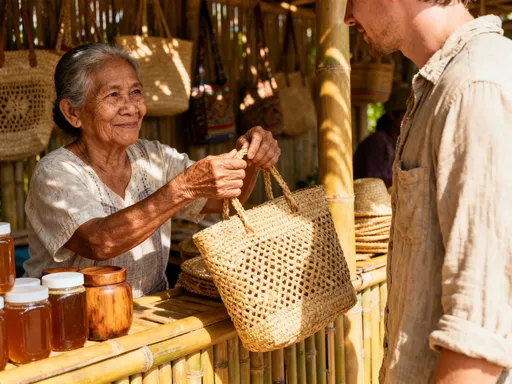
A short bicycle ride from the city center leads to neighborhoods where centuries-old crafts are still practiced with quiet dedication. In villages like Thanh Thuy and Phu Cam, artisans work in small, family-run workshops, their hands moving with precision honed over generations. Here, lacquerware is not mass-produced but carefully layered, each piece requiring dozens of applications and weeks of drying. Conical hats, known as non la, are handwoven from palm leaves, their delicate frames shaped by artisans who learned the craft from their parents and grandparents.
One morning, I visited a calligraphy studio tucked behind a quiet alley, where a retired teacher named Mr. Tan spends his days painting poetic verses in elegant Chu Nom script. He explained that each stroke carries meaning—not just in the words, but in the rhythm and balance of the characters. “Writing is meditation,” he said, dipping his brush into ink. “It teaches patience and respect.” I tried my hand at a simple phrase, and though my strokes were clumsy, the act of writing felt grounding, a connection to a tradition that values mindfulness over speed.
In another workshop, I watched a young woman dye fabric using natural pigments derived from roots, leaves, and tree bark. She demonstrated the ancient batik technique, using hot wax to create intricate patterns before submerging the cloth in dye. These methods are labor-intensive and yield only a few pieces each week, yet they endure because they represent more than craft—they embody identity. By supporting these artisans, travelers contribute to the survival of traditions that might otherwise fade in the face of industrialization. These workshops are not tourist traps; they are quiet acts of resistance, preserving beauty and meaning in a fast-changing world.
Rituals in Motion: Experiencing Daily Spiritual Life
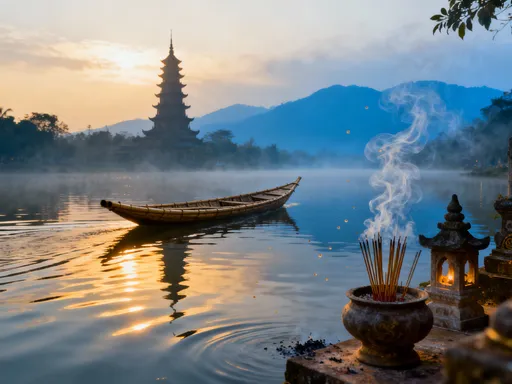
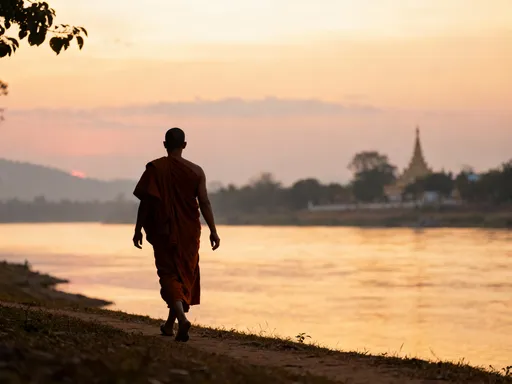
In Hue, spirituality is not reserved for Sundays or special occasions—it is woven into the fabric of daily life. Each morning, as the sun rises over the Perfume River, the city stirs with quiet devotion. At Thien Mu Pagoda, one of Vietnam’s most iconic religious sites, monks in saffron robes chant morning prayers, their voices blending with the rustle of bamboo and the soft plash of water against the riverbank. Incense coils upward in delicate spirals, carrying prayers skyward, while elderly women in black ao dai place fresh lotus blossoms at the foot of Buddha statues.
Ancestor worship, a cornerstone of Vietnamese spiritual life, is practiced with deep sincerity. In homes and communal spaces alike, small altars adorned with photographs, candles, and offerings stand as reminders of those who came before. I was invited to observe a family ceremony in a modest neighborhood home, where three generations gathered to honor a recently deceased grandfather. Bowls of rice, cups of tea, and plates of fruit were arranged on the altar, and each family member bowed in turn, their movements measured and reverent. No words were spoken, yet the atmosphere was rich with emotion—love, gratitude, and a quiet acceptance of loss.
What struck me most was the absence of spectacle. This was not a performance for outsiders, but a private moment of connection. The family welcomed my presence not because I was a tourist, but because they understood that respect for ancestors is a universal value, one that transcends language. In a world where rituals are often reduced to photo opportunities, Hue offers a different model—one where spirituality is lived, not displayed. To witness such moments is to understand that culture is not just what people do, but how they remember, honor, and carry forward what matters most.
Flavors That Tell Stories: Eating Like a Local in Hue
To taste Hue is to understand its soul. The city’s cuisine, recognized by UNESCO as part of the world’s intangible cultural heritage, is bold, aromatic, and deeply symbolic. Unlike the lighter dishes of the north or the sweeter flavors of the south, Hue’s food carries a complexity shaped by royal refinement and rural resourcefulness. At its heart is bún bò Huế, a spicy beef noodle soup simmered for hours with lemongrass, shrimp paste, and chili oil. Each bowl is a balance of heat, salt, and fragrance, a reflection of the city’s layered history.
One afternoon, I followed the scent of grilled pork to a small family-run eatery tucked beneath a mango tree. The owner, Mrs. Lan, served me bún thịt nướng—rice vermicelli topped with charred pork, fresh herbs, and crushed peanuts. As we sat on low plastic stools, she explained how her grandmother taught her to marinate the meat with fish sauce, sugar, and turmeric. “The secret,” she said with a smile, “is time. Good food cannot be rushed.” Her daughter, who now runs the kitchen, learned the recipes by watching and tasting, not from written instructions. This oral transmission of knowledge is common in Hue, where family recipes are guarded treasures, passed down like heirlooms.
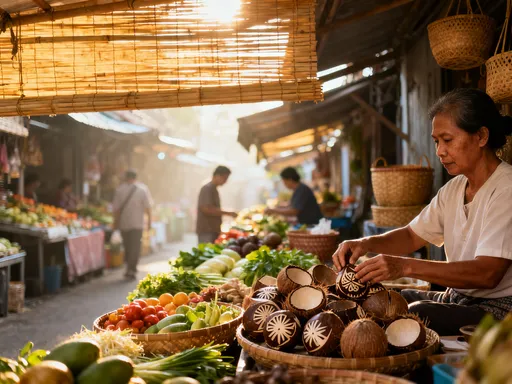
Beyond the well-known dishes, Hue offers a world of bite-sized delights—bánh bèo (steamed rice cakes topped with shrimp), bánh nậm (banana-leaf-wrapped dumplings), and bánh khoái (crispy pancakes). These are not restaurant creations but home foods, often sold at street-side stalls run by women who have cooked the same recipes for decades. To eat here is to participate in a culinary tradition that values patience, balance, and care. And with every bite, you taste not just ingredients, but stories—of resilience, memory, and the quiet pride of preserving what is precious.
Navigating the Perfume River: A Journey Through Layers of Time
A boat ride along the Perfume River is more than a scenic excursion—it is a journey through the heart of Hue’s identity. Named for the fragrant blossoms that drift into its waters from upstream gardens, the river has long been a lifeline for the city, shaping trade, religion, and royal life. As the boat glides forward, the landscape unfolds in gentle layers: emerald rice fields, riverside villages, and the occasional water buffalo wading through the shallows. Along the banks, pagodas and royal tombs rise like silent sentinels, each telling a chapter of Vietnam’s story.
The tombs of emperors such as Minh Mang, Tu Duc, and Khai Dinh are not merely burial sites but elaborate complexes blending architecture, poetry, and nature. Tu Duc’s tomb, set in a serene lake garden, was once his retreat during life—a place of contemplation and creativity. Today, it invites visitors to slow down, to walk the winding paths, and to listen to the wind through the pines. The river connects these sites, allowing travelers to experience them not as isolated attractions, but as parts of a greater cultural landscape.
For the most meaningful experience, go at dawn. The early light softens the colors, and the river is nearly empty—just the dip of oars and the call of kingfishers breaking the silence. By midday, tourist boats crowd the water, but in the morning, you can feel the river’s quiet power, its role as both a physical and spiritual conduit. As the boat passes a floating market or a group of children waving from the shore, you realize that the Perfume River is not just a relic of the past, but a living artery, sustaining communities and traditions with every current.
Traveling with Respect: How to Engage Authentically
Visiting Hue is not just about seeing—it’s about being present. The city rewards those who approach with humility and curiosity. One of the simplest ways to connect is by learning a few phrases in Vietnamese. A polite “Xin chào” (hello) or “Cảm ơn” (thank you) can open doors and warm hearts. Locals appreciate the effort, even if your pronunciation is imperfect. It signals respect, a willingness to step into their world rather than expect them to adapt to yours.
Dress modestly when visiting pagodas and family homes. Shoulders and knees should be covered, not as a rigid rule, but as a gesture of reverence. When photographing people, especially during ceremonies or in private spaces, always ask first. A smile and a gesture can communicate more than words. Many will happily pose if they feel respected, but the act of asking matters deeply. It acknowledges their dignity and autonomy.
Choose experiences that support local communities. Opt for homestays over international hotels, family-run restaurants over chain eateries, and guided tours led by residents rather than imported operators. Community-based tourism initiatives, such as craft workshops or village cooking classes, ensure that your visit contributes directly to those who call Hue home. These choices may require more planning, but they yield richer, more meaningful encounters.
Finally, travel slowly. Resist the urge to check off landmarks. Instead, sit in a café and watch the world go by, accept an invitation to share tea, or linger at a market to learn about ingredients. Authentic connection grows from presence, not speed. In Hue, the most powerful moments often come when you least expect them—a shared laugh, a quiet gesture, a song drifting from an open window. These are the threads that weave the true fabric of culture.
Conclusion
Hue doesn’t shout—it whispers. Its power lies in subtlety: a melody from a passing bicycle bell, the scent of frangipani near an old temple, the warmth of a shared smile. By stepping off the expected path, travelers don’t just see culture—they feel it. And in that feeling, we find the truest kind of connection. This is not a destination for those seeking adrenaline or luxury, but for those who value depth, authenticity, and the quiet dignity of a place that honors its past while living fully in the present. In Hue, every moment is an invitation—to listen, to learn, to remember. And in return, it offers not just memories, but a deeper understanding of what it means to be human.