Skyline Secrets: How to See Bucharest Like a True Local
Bucharest isn’t just about grand architecture and hidden courtyards—its real magic unfolds when you know where to look and when to be there. I’ve wandered its streets at dawn, scoped out rooftops with locals, and learned the subtle art of timing, angles, and quiet corners. This city reveals itself differently depending on your perspective—literally. Let me show you how to turn ordinary views into unforgettable visual stories, using simple but powerful observation techniques that most tourists miss. With its layered history, dynamic light, and rhythm of daily life, Bucharest rewards those who look beyond the postcard. It’s not about ticking off landmarks; it’s about tuning in.
The Rhythm of Light and Time
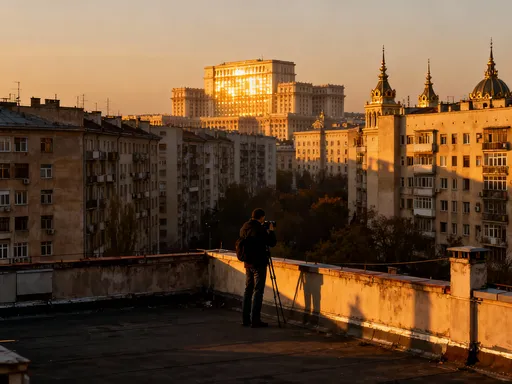
Bucharest’s soul shifts with the sun. In the early hours, just before sunrise, the city breathes quietly. The massive silhouette of the Palace of Parliament, often overwhelming in daylight, becomes softened by a pale golden glow that traces its edges like a pencil line. This is the hour when photographers and long-time residents slip through the streets, drawn by the clarity of light and the absence of noise. The low-angle rays of morning illuminate façades in a way that highlights texture—peeling stucco, ornate carvings, the faint patina of age. In districts like Dorobanți and Primăverii, the Belle Époque villas come alive with warm reflections, their once-faded elegance restored by the sun’s gentle touch.
By midday, that same light turns harsh, flattening depth and muting colors. This is when most visitors arrive, squinting under a high sun that washes out details and creates sharp, unflattering contrasts. Yet locals know to retreat during these hours, reserving their outdoor time for late afternoon or early evening. Twilight, known in Romanian as "ora de aur" or the golden hour, transforms the city once more. As the sun dips behind the northern hills, the sky fills with deep oranges and soft purples, casting long shadows that add drama to even the most ordinary street corners. The modern glass towers near Piața Presei Libere begin to glow from within, their interiors lit like lanterns, while the older buildings absorb the fading light in warm, earthy tones.
Understanding this rhythm is key to seeing Bucharest as a living canvas. The city doesn’t just look different at various times—it feels different. Early mornings offer intimacy and stillness, perfect for slow walks along Calea Victoriei, where the only sounds are distant trams and the occasional baker opening shop. Evenings bring energy: the hum of conversation from sidewalk cafés, the flicker of neon signs, and the soft blur of headlights on wet pavement after rain. For those who time their visits wisely, the city offers not one view, but many—each with its own mood, texture, and story.
Elevated Perspectives Beyond the Obelisk
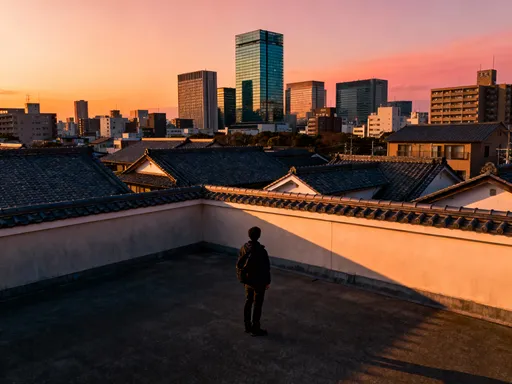
Most tourists head straight to the Carol Park Obelisk or the viewing deck of the National Museum of Art for a skyline glimpse. While these offer decent panoramas, they’re often crowded and limited in scope. True local insight comes from lesser-known vantage points—places where the city unfolds in unexpected layers. One of the best is the rooftop café at Upstairs in Lipscani, tucked above a quiet side street. From here, you can see the tangled rooftops of Old Town stretching toward the spires of Stavropoleos Church, with the modern skyline rising gently in the distance. The advantage? You’re not just observing—you’re part of the scene, sipping coffee as locals pass below, unaware they’re in someone’s photograph.
Another hidden gem is the upper floor of the Central University Library. Though not widely advertised, visitors are often allowed to access the reading rooms on the top level, where floor-to-ceiling windows face west. At sunset, the light floods in, turning the white marble walls into a radiant backdrop. From this quiet academic perch, you can trace the alignment of streets radiating from University Square, watching how traffic flows like veins through the urban body. It’s a perspective few ever experience, yet entirely accessible with respectful behavior and proper timing—late afternoon on a weekday, when student traffic is light.
For a more natural elevation, the hills in Herastrău Park offer gentle climbs with rewarding outlooks. Near the Romanian Peasant Museum, a small rise provides a sweeping view of Lake Herăstrău, framed by trees and dotted with paddle boats in summer. From here, the city feels both close and distant—urban life continues beyond the park’s edge, but the greenery creates a buffer of calm. These elevated spots teach a valuable lesson: height isn’t everything. What matters more is angle—finding a position where contrasts emerge, where old and new, nature and structure, coexist in a single frame. And unlike tourist-heavy observation decks, these places allow time and space to absorb what you see, without rushing or jostling for space.
Street-Level Storytelling Through Windows and Arcades
While many visitors crane their necks upward, the real stories of Bucharest often unfold at eye level—or lower. The city’s historic arcades, tucked behind wrought-iron gates and ivy-covered walls, are living galleries of texture, shadow, and memory. In the Fabrica district, once a hub of industrial workshops, repurposed courtyards now host artisan studios and small galleries. A simple wrought-iron gate might frame a painter at work, his canvas lit by a single overhead bulb, or a cat curled on a stack of old books. These are not staged scenes—they’re fragments of daily life, visible only to those who walk slowly and look closely.
Reflections in shop windows add another dimension to street-level observation. On a quiet morning in the Muncii neighborhood, the glass of a closed bakery might mirror the pink sky above, blending past and present—the warm glow of dawn with yesterday’s leftover pastries behind the counter. The distortion of old glass adds character: rippled surfaces turn straight lines into waves, turning a simple reflection into an impressionist painting. These moments are fleeting, often missed by those focused on destinations rather than details.
Architectural fragments also tell silent stories. A crumbling column, half-hidden behind a modern awning, speaks of layers of time. A stained-glass transom above a forgotten doorway hints at former grandeur. These are not ruins to be pitied, but evidence of continuity—proof that Bucharest has always been in motion, adapting rather than erasing. By training your eye to notice these small compositions, you begin to see the city not as a collection of monuments, but as a living narrative. Each cracked tile, each shadowed arch, becomes a sentence in a longer story—one that unfolds only when you stop, pause, and allow yourself to be present.
Navigating the City’s Visual Layers
Bucharest’s skyline is a visual conversation between eras. Communist-era apartment blocks stand shoulder to shoulder with 19th-century mansions, while sleek glass towers rise like sentinels in the background. This architectural mosaic isn’t chaotic—it’s layered, and learning to read those layers enhances your perception of the city. In the Titan neighborhood, for example, a modest Orthodox chapel with a blue dome sits quietly between two massive panel blocks. From the right angle, the chapel appears to float, its delicate form contrasting with the rigid geometry of the surrounding structures. This juxtaposition isn’t accidental; it’s a testament to how Bucharest has grown—not by demolition, but by addition.
Understanding urban layout helps anticipate these moments of contrast. The city’s grid, influenced by both Austro-Hungarian planning and Soviet-era expansion, creates long, straight avenues that act as natural sightlines. Calea Griviței, for instance, offers a clear view from the north all the way to the Parliament building, with layers of buildings stepping back like a theatrical set. When walking such streets, try to look through rather than just at. Notice how balconies align, how rooflines create patterns, how a single tree in a courtyard becomes a focal point against a sea of concrete.
These visual layers also reflect social history. The grand villas of the early 1900s were built for aristocrats and merchants; the mid-century blocks housed workers; today’s high-rises cater to a new generation of professionals. Each layer carries its own aesthetic, its own values. By recognizing these strata, you gain not just a better view, but a deeper understanding of the city’s identity. It’s not about preferring one style over another, but appreciating how they coexist—sometimes in tension, often in harmony. The skilled observer learns to see Bucharest not as a series of isolated buildings, but as a continuous, evolving composition.
Blending In to Stand Still: The Art of Unnoticed Observation
In a city where tourists often move in clusters, carrying maps and cameras at the ready, the simple act of standing still can be radical. Locals, by contrast, know the value of pausing—on a bench in Cișmigiu Gardens, at a corner kiosk buying a newspaper, or simply leaning against a wall while waiting for a friend. These moments of stillness are not idle; they are acts of awareness. When you stop moving, your senses sharpen. You notice the scent of roasting chestnuts in winter, the sound of a violin from an open window, the way light shifts across a cobblestone square.
To observe like a local, you must also move like one. Dress modestly and practically—avoid bright colors or bulky gear that signal "visitor." Carry a reusable coffee cup from a local roastery rather than a branded takeaway cup from a chain. Choose seating wisely: a bench near a tram stop, a stool at a standing bar, or a quiet corner of a neighborhood park. These are not just places to rest—they’re observation posts. From them, you can watch the rhythm of daily life unfold: a grandmother walking her dog, a delivery cyclist weaving through traffic, a street cleaner sweeping leaves into neat piles.
This kind of presence doesn’t draw attention. Instead, it allows you to become part of the background—a silent witness to the city’s pulse. Over time, you begin to recognize patterns: which bakeries open earliest, which parks fill with joggers at dawn, which streets quiet down after 8 p.m. This familiarity fosters connection. You’re no longer an outsider looking in; you’re someone who belongs, even if temporarily. And in that belonging, your vision deepens. You see not just what the city looks like, but how it lives.
Weather as a Visual Ally, Not an Enemy
Many travelers check the weather app with dread, hoping for clear skies and sunshine. But in Bucharest, overcast days and light rain can be allies, not obstacles. When clouds blanket the sky, they create a natural diffuser, softening harsh contrasts and revealing subtle colors often lost in bright sunlight. A gray afternoon can make the yellow façade of the Athenaeum glow with warmth, or bring out the deep reds in a brick chimney that looked dull under noon sun. Fog, especially in winter, wraps the city in mystery, turning familiar landmarks into silhouettes and giving streets a dreamlike quality.
Rain adds another dimension. Puddles on uneven pavement become mirrors, doubling the city’s architecture and creating surreal compositions. A single streetlamp at dusk, reflected in a pool of water, can turn an ordinary intersection into a painting. The damp streets also deepen colors—the green of park trees, the blue of a tram, the rust of an old balcony railing. These effects don’t require special equipment, just a willingness to step outside when others retreat indoors.
With the right mindset, "bad" weather becomes an invitation to see differently. A lightweight waterproof jacket, water-resistant shoes, and a small microfiber cloth for wiping lenses are all you need. Instead of rushing from place to place, slow down. Take shelter under a covered arcade and watch the rain fall. Notice how people adapt—huddling under awnings, sharing umbrellas, laughing as they splash through puddles. These are human moments, fleeting and authentic, that rarely appear in guidebooks. By embracing the full range of Bucharest’s weather, you gain access to a richer, more textured experience—one that goes beyond perfect conditions to capture the city’s true character.
Curating Your Personal Viewbook: From Snapshot to Memory
In the age of smartphones, we take hundreds of photos, yet remember few. To truly remember Bucharest, go beyond the snapshot. Try carrying a small notebook and jotting down what you see, hear, and feel at a given moment. "Morning light on the fountain in Cișmigiu—children feeding ducks, steam rising from a coffee cup." These notes, combined with one or two deliberate photos, create a richer archive than a thousand unsorted images. Some visitors sketch—a quick line drawing of a doorway, a rooftop outline—forcing the eye to notice proportions and details a camera might miss.
The goal isn’t to create art, but to deepen perception. When you record a moment with intention, you anchor it in memory. Over time, these become threads in a personal narrative: not just "I went to Bucharest," but "I saw the city wake up on a Tuesday in May," or "I watched rain fall on a quiet street near the university." These are the moments that linger. Consider organizing them into a seasonal viewbook—spring blossoms in Herăstrău, summer evenings in Văcărești, autumn light in Cotroceni, winter fog in Titan. Each entry becomes a chapter in your ongoing relationship with the city.
This practice also shifts your focus from collecting sights to cultivating presence. You’re no longer chasing the perfect photo; you’re building a living record of attention. And in doing so, you begin to see Bucharest not as a destination, but as a companion—one that reveals more each time you return, each time you look with care.
Conclusion
Seeing Bucharest like a local isn’t about knowing secret addresses or finding hidden bars. It’s about cultivating a mindset—one of patience, awareness, and quiet observation. The city reveals its beauty not to those who rush, but to those who pause. Whether it’s the golden light on Parliament at dawn, the reflection in a rain-soaked window, or the sound of a distant tram at twilight, these moments form a deeper connection than any checklist ever could. By mastering the rhythms of light, embracing weather, and learning to stand still, you transform your visit from a tour into a dialogue. Bucharest is not a monument to be consumed, but a living presence to be met. Let your eyes adjust. Let your pace slow. And allow the city to show you not just what it looks like—but what it feels like, one thoughtful glance at a time.