Hidden Vistas: Why Vientiane’s Quiet Corners Are Pure Gold for Your Camera Roll
You know that feeling when you stumble upon a place so quietly stunning, you almost don’t want to share it? That’s Vientiane. Forget the crowded hotspots—this city’s magic lies in its peaceful river bends, golden temples at golden hour, and streets where time moves slower than your shutter speed. I went searching for views that felt real—and found spots so photogenic, you’d think they were staged. This is what travel looks like when you chase moments, not just landmarks. In a world where every destination seems curated for the same viral shot, Vientiane offers something rare: authenticity. It doesn’t shout for attention. Instead, it whispers through rustling palm trees, the soft chime of temple bells, and reflections rippling across the Mekong at dawn. For photographers seeking depth, stillness, and soul, this riverside capital is a quiet revelation waiting to be discovered—one frame at a time.
The Underrated Charm of Vientiane
Vientiane, the capital of Laos, often slips beneath the radar of Southeast Asia’s more famous cities. Unlike Bangkok’s frenetic energy or Hanoi’s bustling alleyways, Vientiane unfolds at a gentler pace. There are no towering skyscrapers dominating the skyline, no endless streams of motorbikes drowning out conversation. Instead, the city breathes with a rhythm all its own—measured, unhurried, and deeply rooted in tradition. This calm is not a lack of excitement but a different kind of richness, one that rewards those who take the time to look closely. For photographers, this tranquility translates into rare opportunities: unobstructed views, natural light unfiltered by urban glare, and scenes that feel untouched by mass tourism.
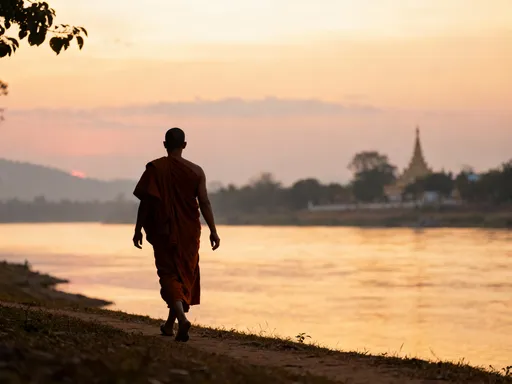
What makes Vientiane particularly compelling is its relationship with the Mekong River. The river doesn’t just border the city—it shapes its identity. Wide, slow-moving, and reflective, the Mekong serves as a natural canvas for light and shadow, especially during the early morning and late afternoon. Along its banks, life unfolds in quiet harmony: fishermen casting nets, families strolling at sunset, monks walking barefoot on dusty paths. These are not staged performances for tourists but daily rituals, repeated with grace and consistency. Capturing them requires no special equipment, only patience and respect. The city’s low density means you won’t compete with crowds for the perfect angle. You can linger, observe, and wait for the moment when light, movement, and stillness align.
Moreover, Vientiane’s architecture tells a story of layered history. French colonial buildings with peeling pastel walls stand beside golden Buddhist stupas, their spires catching the sun like beacons. Tree-lined avenues offer natural framing for street photography, while shaded courtyards invite exploration. Unlike destinations where every corner feels optimized for Instagram, Vientiane retains an organic quality. Graffiti is sparse, commercial signage is modest, and the visual clutter common in other capitals is refreshingly absent. This simplicity allows the eye to focus on what matters—the texture of time, the warmth of light, the quiet dignity of everyday life. For photographers, this is a gift: a city where beauty reveals itself gradually, not all at once.
Morning Light at That Luang: A Photographer’s First Stop
Pha That Luang, the most sacred monument in Laos, is more than a religious site—it’s a masterpiece of light and form. Arriving before sunrise transforms the experience entirely. As the first rays of dawn touch the golden stupa, the entire structure begins to glow, as if lit from within. The early light wraps around its tiered spire, accentuating the intricate carvings and casting long, dramatic shadows across the plaza. This is the moment when the temple feels most alive, not with crowds, but with a spiritual energy that resonates in every photograph. The stillness of the morning amplifies the sense of reverence, making it easier to capture images that convey not just the monument’s beauty but its soul.
Photographers should position themselves to the east or southeast of the stupa to catch the full effect of the rising sun. A wide-angle lens helps capture the monument in its full grandeur, while a telephoto lens can isolate details like the lotus-shaped base or the flame-like pinnacle. Tripods are allowed during early hours, which is essential for low-light shots that preserve the soft gradients of dawn. As the sky shifts from deep indigo to soft gold, the reflection of the stupa in the surrounding moat creates a mirror image, doubling the visual impact. This symmetry is fleeting—once the sun climbs higher, the reflection dissolves into glare.
One of the greatest advantages of visiting at sunrise is the near absence of tourists. Most guided groups arrive later in the morning, so the early hours belong to those who seek solitude. This allows for unobstructed movement around the site, giving photographers the freedom to experiment with angles and compositions. Even the monks who come to meditate offer compelling subjects—their saffron robes glowing against the muted stone, their movements slow and deliberate. Capturing them requires discretion, but a respectful distance and a quiet presence often go unnoticed. The key is to blend into the moment rather than disrupt it. When done right, the resulting images feel less like snapshots and more like visual prayers.
Riverside Vistas: The Mekong as a Living Backdrop
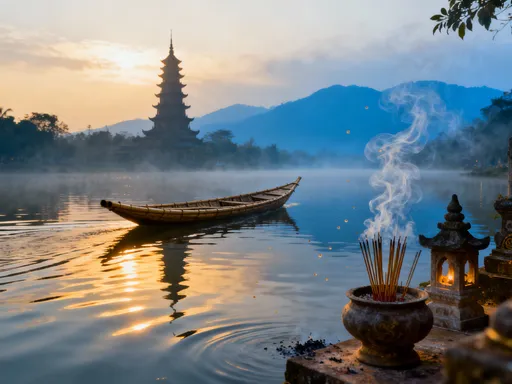
The Mekong River is the lifeblood of Vientiane, and its banks offer some of the most poetic photography opportunities in the city. From the serene expanse near the Laos–Thailand Friendship Bridge to the shaded promenades of Setthathirath Park, the river changes character throughout the day. At dawn, the water is often still, creating perfect mirror images of the sky and shoreline. This natural symmetry is a gift for photographers, allowing for compositions that balance reality and reflection. As the sun rises, the surface begins to ripple, scattering light like shattered glass—a dynamic effect best captured with a slightly slower shutter speed to convey movement.
One of the most evocative scenes along the river is the morning alms-giving, or *tak bat*, when monks walk silently through the streets collecting food offerings. While the practice occurs throughout the city, the riverside paths provide a particularly atmospheric setting. The soft morning light filters through the trees, illuminating the monks’ robes and casting long shadows on the pavement. Photographers should arrive early and maintain a respectful distance, using a zoom lens to avoid intrusion. The goal is not to capture a performance but to document a sacred tradition with dignity. Images that include the river in the background—perhaps a monk’s reflection in a puddle or the distant curve of the water—add layers of meaning and context.
Later in the day, the riverfront becomes a space of leisure. Locals cycle along the paved paths, children fly kites in open fields, and elderly couples sit on benches watching the current flow. These everyday moments, when framed with care, become powerful visual stories. A low angle can emphasize the curve of a bicycle wheel against the sky, while a wide shot might capture the sweep of the river with a single boat drifting in the distance. The key is to look beyond the obvious and notice the small gestures—the way a hand rests on a handlebar, the tilt of a head in conversation, the way light catches a strand of hair. These details, when composed thoughtfully, turn simple scenes into lasting images.
Temple Hopping with an Eye for Detail
While Vientiane’s grand temples are undeniably impressive, some of the most compelling photographs come from looking closer. Wat Si Saket, with its thousands of Buddha images, offers endless opportunities for detail work. Instead of capturing the entire hall, focus on a single statue—perhaps one with a chipped hand or a cracked face, its imperfections telling a story of time and devotion. The play of light through the temple’s wooden shutters creates natural spotlights, drawing attention to specific figures. These moments of illumination can be captured with a shallow depth of field, blurring the background to emphasize texture and form.
Other lesser-known temples, such as Wat Si Muang or Wat Ho Phra Keo, also reward close observation. Carved doors, weathered murals, and lotus motifs repeated in stonework all serve as compelling subjects. A macro lens can reveal the fine grain of ancient wood, the fading colors of centuries-old paint, or the delicate patterns etched into metal offerings. These details, often overlooked by casual visitors, become the heart of a photographic narrative. They remind us that beauty is not always in scale but in the marks left by time, belief, and human hands.
Lighting is crucial when photographing interior details. Many temples have limited artificial lighting, so shooting during mid-morning or early afternoon allows natural light to filter through windows and doorways. A tripod can help stabilize the camera for longer exposures, especially in dimly lit corners. However, flash photography is often discouraged out of respect for the sacred space. Instead, rely on available light and adjust your ISO settings accordingly. The slight grain in higher ISO images can even add a sense of authenticity, echoing the aged quality of the surroundings. By focusing on small elements, photographers can create a collection of images that, when viewed together, tell a richer, more intimate story than any single wide-angle shot could.
Urban Poetry: Street Scenes That Tell Stories
Vientiane’s streets, especially in older neighborhoods like Ban Anou, feel like pages from a forgotten photo album. Pastel-colored colonial buildings with shuttered windows line quiet avenues, their facades softened by time and tropical humidity. Street vendors arrange fruit on wooden carts, their colors vibrant against the muted walls. Children kick a makeshift ball in a dusty courtyard. These are not staged scenes but fragments of daily life, rich with narrative potential. The challenge for photographers is to capture them without disrupting the moment.
Respectful street photography begins with awareness. A smile, a nod, or a simple gesture of acknowledgment can go a long way in building trust. In many cases, asking permission is the right choice, especially when photographing individuals up close. But even when shooting from a distance, the goal should be to portray people with dignity, not as exotic subjects. Framing is essential—using shadows, doorways, or tree branches to create natural borders around a scene can elevate a simple moment into a composed image. The interplay of light and shadow, particularly in the late morning when the sun cuts sharply across buildings, adds depth and drama.
Color also plays a powerful role in Vientiane’s street photography. The saffron of monks’ robes, the red of betel nut stains on sidewalks, the green of banana leaves wrapped around street food—all contribute to a palette that is both vibrant and harmonious. These colors emerge naturally, not as tourist attractions but as part of the city’s visual language. By paying attention to how they interact—how a splash of red echoes in a market awning, or how the green of palm fronds frames a child’s face—photographers can create images that feel both spontaneous and intentional. The best street photos are not just seen; they are felt.
Golden Hour on Thanon Kittikhong: Where Light Paints the City
As the sun begins its descent, Thanon Kittikhong transforms into a corridor of golden light. This tree-lined street, flanked by temples and low-rise buildings, becomes a natural gallery for photographers chasing the perfect glow. The late afternoon sun slants through the canopy, dappling the pavement with shifting patterns. Golden spires catch the light like torches, their reflections shimmering in puddles and wet streets after a brief rain. This is not just a time of day but a state of being—one that rewards those who walk slowly, camera in hand, ready to capture the ephemeral.
Walking the length of Thanon Kittikhong during golden hour is an exercise in visual discovery. Each turn reveals a new composition: a monk passing under an archway bathed in light, a bicycle parked against a wall with its shadow stretching long, a temple gate framed by flowering trees. The soft, warm light reduces contrast, making it easier to balance highlights and shadows in a single exposure. A polarizing filter can enhance the richness of the sky and reduce glare on wet surfaces, while a slightly underexposed image can preserve the intensity of the golden tones.
Timing is everything. The window for ideal lighting lasts only 20 to 30 minutes, so preparation is key. Charge your batteries, format your memory cards, and scout the route earlier in the day. Know where the light will fall and position yourself accordingly. But don’t be rigid—some of the best shots come from unexpected moments: a sudden gust of wind scattering leaves, a child running into the frame, a bird taking flight from a rooftop. These unplanned events, when captured in golden light, become the most memorable images. The street doesn’t need to be crowded to be alive; sometimes, a single silhouette against the glow is enough.
Chasing Stillness: Why the Best Shots Come from Slowing Down
In an age of rapid travel and instant sharing, the most powerful photographs often come from stillness. Vientiane teaches this lesson quietly. It doesn’t offer adrenaline or spectacle. Instead, it invites presence. The best images I captured weren’t the ones I planned but the ones I stumbled into—because I was walking slowly, because I paused to watch the water, because I waited for the light to shift just so. A lone boat drifting on the Mekong at dusk. A monk’s shadow stretching across an empty courtyard. A single lotus floating in a temple pond. These moments didn’t announce themselves. They revealed themselves to those willing to wait.
Great photography isn’t about having the latest camera or the most followers. It’s about seeing—truly seeing—the world as it is. In Vientiane, that means embracing slowness. It means setting aside the checklist of must-see sites and allowing yourself to get lost in the in-between spaces. It means listening to the rhythm of the city and letting it guide your steps. When you move at the pace of the place, the camera becomes an extension of your awareness, not a tool for conquest. The images you create are not trophies but testaments—to patience, to presence, to the quiet beauty that exists when we stop rushing.
This approach changes not just your photos but your relationship with travel. You begin to notice more. You remember more. You carry home not just a full memory card but a shifted perspective. Vientiane doesn’t demand your attention; it earns it. And in return, it offers something rare: the chance to see the world—and yourself—more clearly.
Conclusion: Vientiane Through a Different Lens
Vientiane challenges the way we think about travel photography. It asks us to redefine what is valuable—not the most liked image, but the most felt one. In a city where silence speaks louder than noise, the best shots are often the quietest: a patch of light on a temple wall, a reflection in still water, a hand offering alms at dawn. These are not just photographs; they are invitations to slow down, to look deeper, to connect.
For women between 30 and 55—many of whom balance family, work, and personal dreams—Vientiane offers more than scenic views. It offers a model for mindful living. Just as the best photographs emerge from patience and presence, so too can a more meaningful life. Travel becomes not an escape but a mirror, reflecting back the values we wish to carry forward. The camera roll fills not with perfect poses but with authentic moments—reminders that beauty exists in stillness, in simplicity, in the ordinary made extraordinary by attention.
So when you plan your next journey, consider the quiet corners. Seek the places that don’t shout. Let Vientiane be a guide—not just to better photography, but to a deeper way of seeing. Because the truest souvenirs aren’t the images we take, but the way those images change how we see everything else.