You Won’t Believe These Hidden Art Spots in Havana
Havana isn’t just vintage cars and colorful streets—it’s a living canvas. I never expected to find such raw, powerful art tucked in alleyways and colonial courtyards. From bold murals to underground galleries, the city pulses with creative energy. If you're chasing authentic cultural moments, Havana’s art spaces will stop you in your tracks. This is travel with soul—real, unfiltered, and unforgettable.
The Soul of Havana: Where Art Lives Beyond Galleries
In Havana, art doesn’t wait behind velvet ropes or climate-controlled glass. It spills from cracked walls, dances across rusted iron grilles, and breathes life into forgotten doorways. Unlike many global cities where public art is curated or censored, Havana’s creative expressions grow organically—like bougainvillea breaking through concrete. This is a city where scarcity has become a muse. With limited access to traditional materials and formal exhibition spaces, Cuban artists have turned the entire urban landscape into their studio. The result? A deeply personal, community-driven art scene that feels more honest, more urgent, than anything you’d find in a conventional museum.
The roots of this phenomenon run deep. Since the 1960s, Cuba has placed a strong emphasis on cultural education, with art and music woven into public life. Even during the economic hardship of the Special Period in the 1990s, creativity remained a form of resilience. Artists adapted, using found objects, repurposed paint, and everyday surfaces as their mediums. This legacy lives on in the way art today is embedded in daily life—children drawing on sidewalks, elders carving wood in shaded patios, musicians improvising in plazas. To walk through Havana is to move through a layered narrative, where every mural, sculpture, or hand-painted sign tells a story of survival, identity, and pride.
What makes these organic art forms so compelling is their authenticity. In a world where tourism often flattens culture into souvenirs and staged performances, Havana’s street art remains defiantly unpolished. There’s no algorithm dictating what’s “Instagrammable” or commercially viable. Instead, you’ll find works that reflect real concerns—family, faith, freedom, food shortages—rendered with a mix of irony, hope, and humor. For the thoughtful traveler, especially those who value depth over spectacle, these unguarded moments offer a rare window into Cuban soul. They remind us that art isn’t just something to admire—it’s a way of being, a language of resistance and joy.
Fábrica de Arte Cubano: The Hottest Cultural Hub in Town
If Havana has a cultural heartbeat, it pulses strongest at Fábrica de Arte Cubano (FAC). Housed in a repurposed cooking oil factory in Vedado, this multidisciplinary space has redefined what an art venue can be. It’s part gallery, part performance hall, part nightclub—but never quite fitting into any single category. FAC opened in 2014 and quickly became a symbol of Cuba’s evolving creative spirit, drawing locals and visitors alike into its ever-changing orbit. Here, art isn’t passive. It’s loud, it’s immersive, and it demands participation.
The building itself is a canvas. Exposed brick, steel beams, and industrial pipes frame a labyrinth of rooms, each dedicated to a different form of expression. One floor might host a photography exhibit on Afro-Cuban traditions, while another pulses with experimental jazz. A rooftop bar offers panoramic views of the city as dancers move under string lights. The energy is electric, yet never chaotic—there’s a rhythm to the way people flow from space to space, drawn by sound, color, or curiosity. Rotating exhibitions ensure no two visits are the same, and live performances—ranging from spoken word to contemporary dance—add an unpredictable edge.
For travelers planning a visit, timing is key. FAC is open Thursday through Sunday, with Friday and Saturday nights drawing the largest crowds. Arriving early—around 8 p.m.—allows for a more relaxed exploration before the space fills. Entry fees are modest, typically between $2 and $5, often including one drink. While the atmosphere is cosmopolitan, it remains deeply Cuban; you’ll hear more Spanish than English, and the music leans toward local genres like timba and nueva trova. This isn’t a tourist showpiece—it’s a genuine gathering place where artists, intellectuals, and young creatives come to connect.
To make the most of your time, move slowly. Pause in each room, engage with the work, and don’t rush to the bar just because the bass is thumping. Many visitors come for the nightlife but stay for the art. That’s the magic of FAC: it seduces you with energy but rewards you with meaning. Whether you’re standing before a haunting oil painting or swaying to a live saxophone solo, you’re not just observing culture—you’re inside it.
Hidden Courtyards and Local Studios: Off-the-Beaten-Path Gems
Beyond the buzz of FAC, Havana’s quieter artistic treasures lie in its hidden courtyards and private studios. These are not listed in guidebooks, nor do they have websites or opening hours. Instead, they’re discovered through conversation—a tip from a local guide, a chance encounter at a café, or a friendly wave from an artist painting in an open doorway. In neighborhoods like Old Havana, Centro Habana, and Vedado, many creators open their homes as informal galleries, transforming living rooms, patios, and rooftop terraces into intimate exhibition spaces.
One such studio belongs to María Elena, a ceramicist whose family has lived in the same colonial building for over 70 years. Her workshop occupies the inner courtyard, where sunlight filters through a lattice of vines. Shelves hold delicate clay sculptures—birds in flight, faces with closed eyes, hands clasped in prayer. She works without air conditioning, using natural light and hand tools passed down from her grandmother. Visitors are welcome by appointment or when the gate is open, and she often pauses to explain her process, her voice soft but full of conviction. These moments—unscripted, unhurried—are the essence of authentic cultural exchange.
Another gem is a shared studio in a converted schoolhouse in Cayo Hueso, where a collective of young painters experiment with mixed media and recycled materials. Their work critiques consumerism and environmental decay, using everything from old newspapers to scrap metal. Because they operate independently, they welcome direct support—buying a piece means funding their next project. For travelers, this creates a rare opportunity: not just to own art, but to be part of its journey.
When visiting these spaces, respect is paramount. Always ask before taking photos, listen more than you speak, and understand that these are homes as much as galleries. A small donation or purchase goes further than any compliment. These artists aren’t performing for tourists—they’re living their truth. To witness their work is a privilege, not a right. And for those who approach with humility, the reward is a deeper connection—not just to art, but to the people who make it.
Street Art with a Message: Murals That Speak Volumes
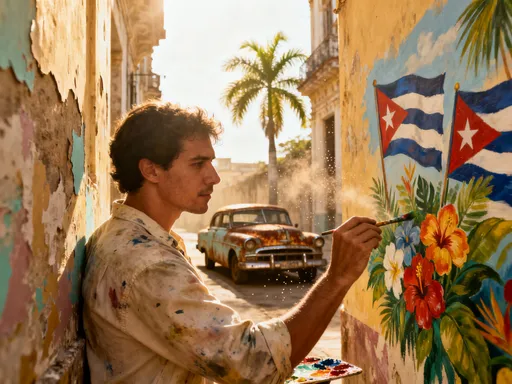
Walk through Centro Habana or San Isidro, and you’ll notice something extraordinary: every block tells a story. Havana’s street art is more than decoration—it’s dialogue. Unlike the whimsical or abstract murals seen in other cities, much of Cuba’s public art carries political, social, or historical weight. These works are created by both state-approved artists and underground collectives, each using walls as a platform for expression. The messages vary—some celebrate national heroes like José Martí or Che Guevara, while others subtly critique bureaucracy, inequality, or isolation.
One striking mural in the Luyanó neighborhood depicts a giant hand releasing a flock of doves, each bird carrying a different symbol—a book, a musical note, a paintbrush. The artist, who asked to remain anonymous, explained it as a tribute to creative freedom. “We may not have much,” he said, “but no one can take imagination away.” Another piece, near the University of Havana, shows a tree growing from a cracked television screen, its roots tangled in cables. It’s a quiet commentary on media, truth, and the persistence of nature in an urban world.
Some murals are officially commissioned, part of government-led beautification projects. Others appear overnight, painted in secret and sometimes painted over just as quickly. Yet even censored works leave a trace—locals remember them, photograph them, share them. In a society where open dissent is rare, street art becomes a coded language, understood by those who know how to look. For visitors, these pieces offer a nuanced understanding of Cuban life—one that transcends headlines and stereotypes.
What’s most powerful is how these murals invite conversation. They don’t shout; they suggest. They don’t demand agreement; they provoke thought. And in a city where resources are tight and life is often challenging, they affirm something essential: that beauty and meaning can emerge from struggle. To walk Havana’s streets is to read a living archive, where every wall holds a whisper of resistance, hope, and identity.
How to Find Authentic Art Spaces (Without Being a Tourist Trap)
With growing tourism, some parts of Havana have begun to cater heavily to visitors, turning art into a commodity. Shops near the Malecón or Old Square sell mass-produced paintings and prints, often made in bulk and lacking connection to the artist’s intent. To experience the real art scene, travelers must go deeper. The key is intentionality—seeking out spaces where creativity is alive, not packaged.
Start with local knowledge. Hire a guide born and raised in Havana, especially one with ties to the arts. Many former artists or art students now lead cultural tours, offering access to studios and events outsiders wouldn’t find alone. Another strategy is to visit during *La Ruta del Arte*, a monthly gallery night in Vedado where independent spaces open their doors, often with live music and artist talks. These events draw mostly locals, creating a genuine atmosphere rather than a performance for tourists.
Also, follow the rhythms of daily life. Visit markets like Fusterlandia or the artisan fair at Plaza San Francisco, where artists sell directly. Ask questions—where do you work? Can I see more?—and be open to impromptu invitations. Some of the best experiences happen when plans fall away and curiosity takes over.
When engaging with art, practice mindful etiquette. Always ask permission before photographing people or private spaces. If you admire a piece, inquire about purchasing it directly from the artist. Prices are often modest—$20 to $100 for smaller works—but for the creator, it can mean buying materials or feeding a family. Avoid haggling aggressively; this isn’t a bazaar, and most artists price their work fairly. Remember, your presence has impact. Choose to support those who create from the heart, not those who replicate for profit.
Art as a Window to Cuban Life: Why It Matters
Engaging with Havana’s art scene is more than a sightseeing activity—it’s a form of cultural listening. In a country shaped by revolution, embargo, and isolation, art has become a vessel for memory, critique, and dreams. It preserves stories that might otherwise be lost. It gives voice to those who cannot speak freely. And it transforms limitation into innovation, turning scarcity into beauty.
For many travelers, especially women between 30 and 55 who value connection and meaning, these encounters can be deeply moving. You might stand in a dim studio, watching an artist mix paint from salvaged pigments, and realize how creativity thrives not despite hardship, but because of it. You might hear a poet recite verses about motherhood and exile, and feel a shared understanding that transcends language. These moments don’t just enrich a trip—they change how you see the world.
Art in Havana reminds us that culture isn’t something you consume. It’s something you participate in. It asks for attention, respect, and openness. When you take the time to look closely, to listen, to ask questions, you stop being a spectator and become part of the story. And in doing so, you carry a piece of Havana’s spirit with you—long after the flight home.
Making the Most of Your Art-Focused Visit: A Smart Traveler’s Approach
To truly experience Havana’s art, plan with flexibility. Map out key spots like FAC or known studios, but leave room for spontaneity. Some of the most memorable discoveries happen when you wander down a side street and hear music drifting from an open window. Allow time not just to see, but to connect. Sit for a coffee with an artist. Attend a small concert in a courtyard. Let conversations unfold naturally.
Balance structure with serendipity. Dedicate mornings to planned visits, when light is best for photography and studios are more likely to be open. Reserve evenings for immersion—live music, gallery nights, or quiet walks through illuminated plazas. Combine art with other cultural experiences: enjoy a meal at a *paladar* (private home restaurant) after a studio visit, or listen to a quartet in Parque Central before heading to a mural tour. These layers create a richer, more cohesive journey.
Most importantly, shift your mindset from collecting sights to collecting moments. Put the camera down sometimes. Breathe in the scent of turpentine and sea air. Notice the way an artist’s hands move across canvas. These sensory details stay with you longer than any photograph. And when you do take pictures, do so with care—never intrude, never exploit. Let your presence be a quiet tribute to the creativity around you.
Finally, embrace imperfection. Not every studio will be open. Some murals may be faded or half-erased. A planned meeting might fall through. But in those gaps, you’ll find authenticity. Havana doesn’t perform flawlessly—and that’s its power. It invites you in, not as a perfect postcard, but as a living, breathing, unfinished work of art.
Havana’s art spaces aren’t just destinations—they’re invitations to see the city through the eyes of its people. By seeking out these creative corners, travelers don’t just collect photos; they gain connection, context, and lasting inspiration. Let curiosity lead, and let the art tell its story.